
Land, Identity And Bloodshed
Land, Identity And Bloodshed
How Land Can Impact Nigeria's Struggle for Peace
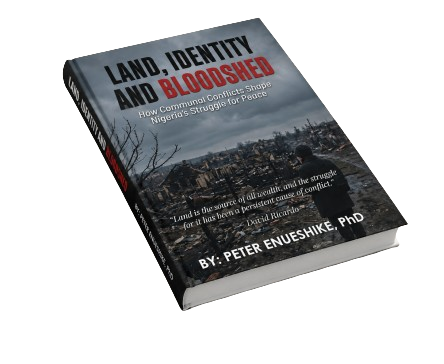
Land, Identity and Bloodshed examines how communal land conflicts take root, why they escalate, and what their human and institutional costs reveal about Nigeria’s struggle for sustainable peace.
About the Book
Understanding the Roots. Envisioning Peace.
What begins as a disagreement over land does not always remain a disagreement over land.
Drawing on historical analysis, conflict theory, regional case studies, and policy perspectives, Land, Identity and Bloodshed explores the forces that can turn competing claims over land into wider communal tensions. The book considers how identity, political exclusion, environmental pressures, unclear land rights, governance failures, and historical memory can reinforce one another and deepen conflict.
Evidence-Based Analysis and Regional Case Studies
Examines communal conflicts across different parts of Nigeria and considers the distinct historical, social, political, and environmental pressures behind them.
Historical Insight and Policy Perspectives
Traces how land administration, identity, governance, and unresolved grievances have contributed to patterns of conflict.
A Focus on Justice, Inclusion and Peace
Explores pathways involving dialogue, accountability, institutional reform, reconciliation, and greater inclusion in the pursuit of lasting peace.
What the Book Explores
Land Conflict
Land can sustain a community, define its livelihood, and carry generations of memory. The book examines disputes over ownership, access, boundaries, resources, and control, as well as the pressures that make these disputes increasingly difficult to contain.
Identity Politics
Ethnicity, religion, ancestry, and communal belonging can become powerful forces in times of tension. The book considers how identity can shape perceptions of who belongs, who has legitimate claims to land, and who holds power.
Peacebuilding
Peace requires more than ending immediate violence. The book explores dialogue, reconciliation, early-warning mechanisms, community participation, restorative approaches, and the rebuilding of trust between divided communities.
Governance
Where institutions are perceived as weak, partial, inaccessible, or unable to resolve disputes fairly, local grievances can become harder to contain. The book examines land governance, legal frameworks, traditional institutions, justice, and the responsibilities of the state.
Memory & History
Communities do not enter conflict without a history. Past grievances, displacement, contested narratives, and memories of earlier violence can influence how present-day disputes are understood and how quickly tensions escalate.
Identity & Belonging
For many communities, land carries meaning far beyond its economic value. It can be tied to dignity, ancestry, culture, security, and belonging. Understanding this connection is essential to understanding why land conflicts can become so deeply personal and difficult to resolve.
About the Author
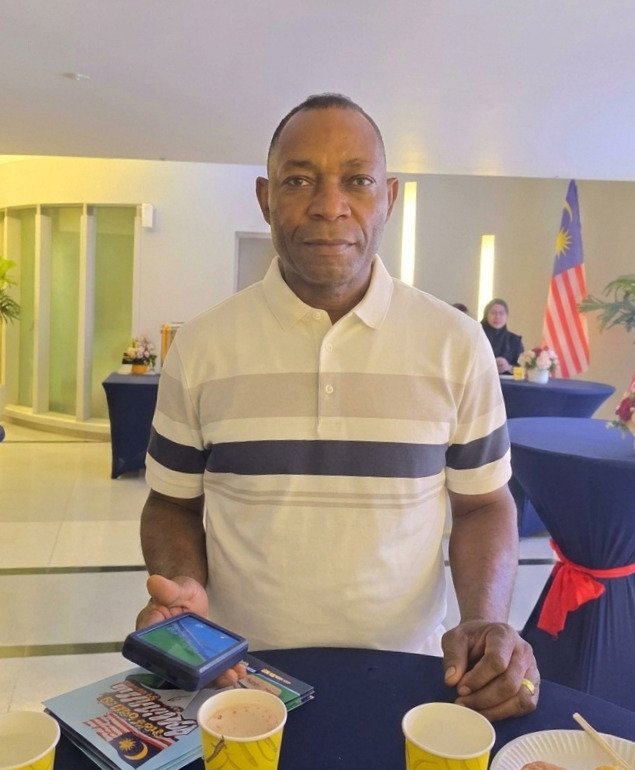
Peter Enueshike, PhD
Dr. Peter Enueshike is a finance scholar, professional accountant, and public sector financial expert whose work brings together academic research and practical experience in financial management, economic policy, and development.
With more than two decades of professional experience, including senior financial management roles in government institutions and diplomatic missions, he brings a policy-oriented perspective to questions of governance, institutions, and social development.
His academic work has examined areas including public finance, financial risk, education, and economic development. In Land, Identity and Bloodshed, he turns his attention to one of Nigeria’s most persistent and complicated challenges: the relationship between land, communal identity, conflict, and the search for peace.
FEATURED VIDEO
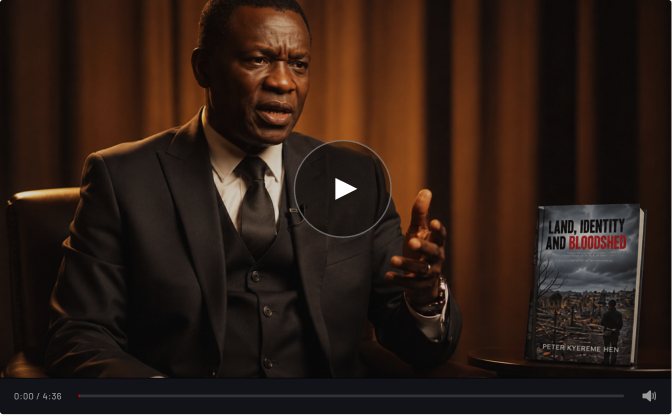
Go behind the pages of Land, Identity and Bloodshed
Watch Dr. Peter Enueshike discuss what led him to examine communal conflict through the interconnected questions of land, identity, governance, and peace.
Hear the thinking behind the book, the issues it seeks to bring into focus, and why understanding the roots of conflict matters when the goal is lasting peace.
“Land is the source of all wealth, and the struggle for it has been a persistent cause of conflict.”
— David Ricardo
Who the Book Is For
Students & Academics
For students, researchers, and scholars exploring peace and conflict studies, political science, sociology, African studies, governance, and related fields.
Policy Makers
For government officials, policymakers, legislators, and analysts examining land administration, communal conflict, governance, security, and institutional reform.
Community Leaders
For traditional, religious, and civil society leaders working within communities where questions of land, identity, belonging, and coexistence remain deeply significant.
Peacebuilders
For practitioners, NGOs, development professionals, and others working in conflict prevention, mediation, reconciliation, and community development.
General Readers
For readers who want to look beyond headlines and understand the historical and social forces that shape communal conflict in Nigeria, as well as the possibilities for a more peaceful future.
A Look Beyond the Immediate Dispute.
Get your copy of Land, Identity and Bloodshed and explore the history, human cost, institutional challenges, and pathways toward sustainable peace in Nigeria.
Also available in paperback and ebook.