
The Book
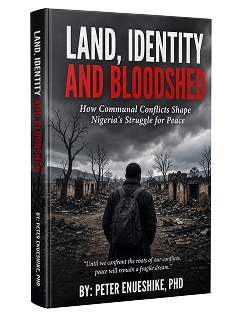
About the Book
Land Is Never Just Land
Land can be a source of livelihood, identity, heritage, belonging, and security. In Nigeria, however, competing claims to land have also contributed to some of the country’s most persistent communal conflicts.
Land, Identity and Bloodshed examine the deeper forces behind these conflicts, looking beyond immediate disputes to explore how land ownership, historical grievances, identity, governance, political interests, and resource competition can intersect and escalate into violence.
Drawing on Nigerian history and regional case studies, the book explores conflicts across different parts of the country while examining the roles of traditional institutions, government structures, land administration, and the legal framework surrounding land ownership. It also considers the human consequences of communal conflict, including displacement, loss of livelihoods, trauma, damaged communities, and the breakdown of trust.
The book goes further by asking an important question: What does sustainable peace actually require?
Dr. Peter Enueshike considers the role of justice, inclusive governance, land reform, community dialogue, responsible media, institutional accountability, and conflict prevention in building lasting peace.
Written for students, researchers, policymakers, community leaders, peacebuilders, and readers seeking a deeper understanding of Nigeria’s conflict landscape, this book offers a thoughtful examination of why land disputes become so deeply connected to questions of identity and belonging, and what can be done to prevent them from becoming cycles of violence.
Evidence-Based Analysis and Regional Case Studies
Examines communal conflicts across different parts of Nigeria and considers the distinct historical, social, political, and environmental pressures behind them.
Historical Insight and Policy Perspectives
Traces how land administration, identity, governance, and unresolved grievances have contributed to patterns of conflict.
A Focus on Justice, Inclusion and Peace
Explores pathways involving dialogue, accountability, institutional reform, reconciliation, and greater inclusion in the pursuit of lasting peace.